
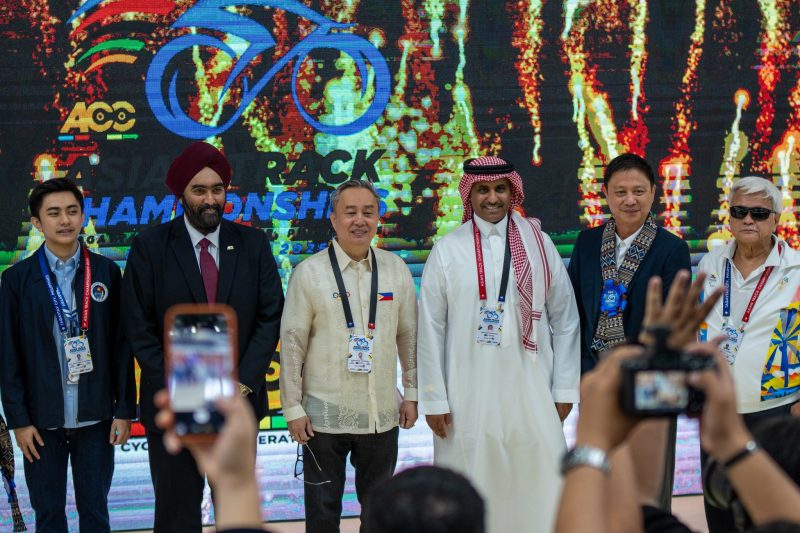
Photo: Philippine Olympic Committee
By Miguel Palaban
There is a quiet surge building in Philippine cycling, and those closest to the sport believe it is only the beginning.
For Philippine Olympic Committee president Abraham Bambol Tolentino, the message is clear; the country has found its place on the global stage and is ready to push further.
That belief gained weight following the successful staging of the 45th Asian Cycling Confederation Track Cycling Championships and the 14th Asian Para Track Cycling Championships, which concluded last Tuesday.
The races were held at the Tagaytay CT Velodrome, a venue that has quickly become a symbol of ambition and progress.
Certified as a Category A facility by the Union Cycliste Internationale, the velodrome delivered a world-class platform for nearly 600 athletes from 16 nations.
Many of them came from established cycling powers, turning the competition into a true test of readiness for the host nation.
Tolentino, who also heads the Integrated Cycling Federation of the Philippines, did not hold back in celebrating the milestone.

Photo: Philippine Olympic Committee
"The Philippines and specifically the Tagaytay CT Velodrome now have their own niche in the global track cycling map,” he said.
It is a remarkable leap for a facility that will only mark its first anniversary in June.
In less than a year, it has gone from a new build to a recognized destination for elite competition. The impact goes beyond infrastructure. It signals intent.
Regional giants showed their pedigree throughout the championships. China dominated the elite sprint events, while Chinese Taipei and South Korea took top honors in the junior ranks.
For Team Philippines, the campaign was more about learning than winning. Competing against seasoned rivals, the home squad experienced what Tolentino described as a necessary baptism of fire.
Tolentino remains realistic about the current level of the program. It is, in his words, starting from scratch. Yet, he sees the exposure as a catalyst.
“We are now in the company of the global destinations for competitions and training in the track community, and the next big step is to continue the momentum, not only in hosting international events but to go full throttle on developing our very own track cyclists,” he said.
There were early signs of promise. Patrick Gerard Lee secured a bronze medal in the para men elite scratch race, while Zedrick Ivan Honorica set a new national mark in the flying 200 meters.
These moments offered a glimpse of what could come with sustained support and development.
For Tolentino, the significance of hosting the continental meet also carries historical weight.
“It’s a long 31 years between hosting 1995 at the now-gone Amoranto Velodrome and 2026 here at the Tagaytay CT Velodrome, it’s historic,” he explained.
History, however, is only meaningful if it leads somewhere. For Philippine cycling, the road ahead is long but filled with possibilities. The foundation is in place, the vision is clear, and the belief is growing.
Tolentino summed it up with quiet confidence.
“Yes, a Filipino rider can in track cycling,” he ended.

 0
0